Project timeline
Energy Democracy: the journey so far
Three years of community organising, feasibility studies, and pilot installations across South Africa.
SCROLL
Three years of community organising, feasibility studies, and pilot installations across South Africa.
The first year of the project included an Inception Phase for partners to forge a collaborative working arrangement, and a Strategic Planning Process to map out the year's work — including community research and a Feasibility Study to estimate the scope of renewable energy options that could become affordable and scalable.
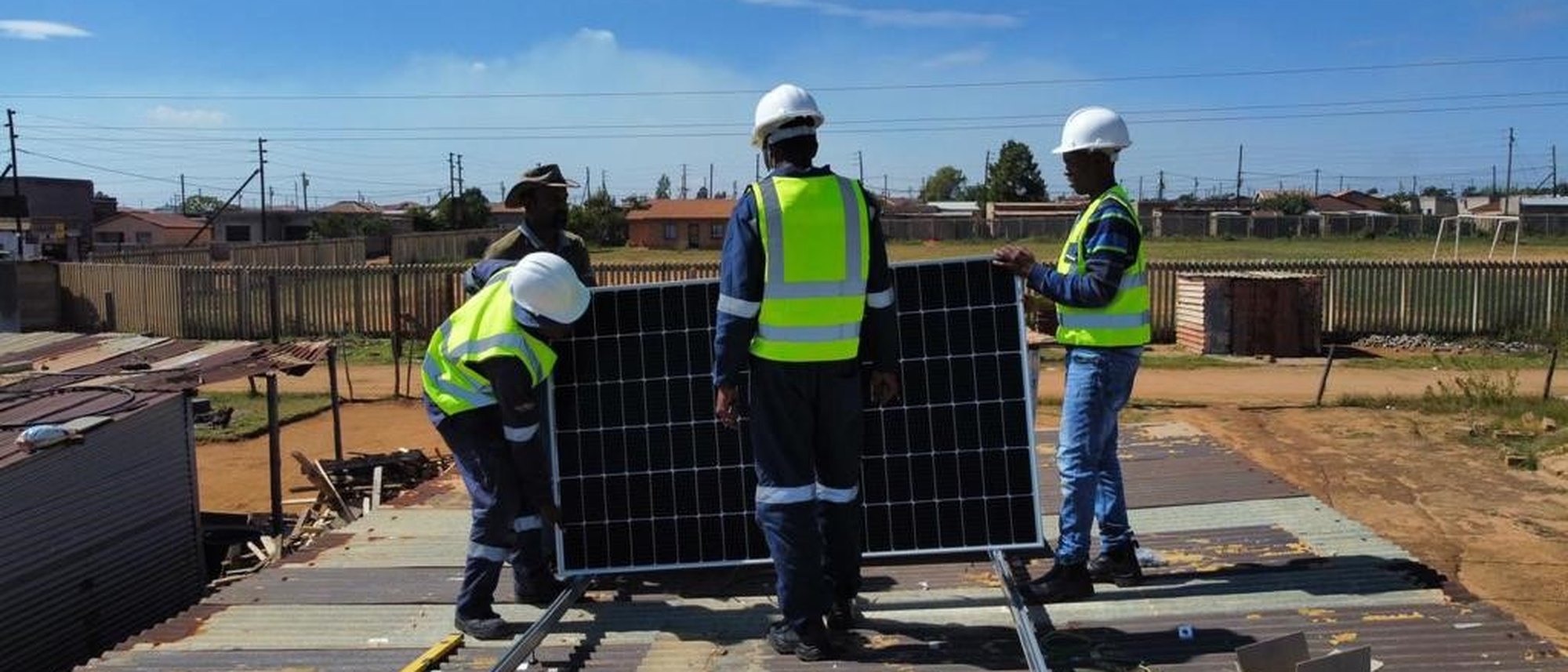
The Implementation Phase included the installation of demonstration units, development of learning materials, and a series of community workshops providing learning opportunities to understand how renewable energy works.
Year One concluded with a Reflection and Adaptation Phase — taking stock of lessons learnt and upcoming opportunities, parts of which were covered by an independent case study and documentary.
Feasibility study findings: Social ownership models point to the need for widespread changes to laws, policies, regulations, and funding to unlock their potential. Off-grid systems can serve as a temporary solution while awaiting electrification, though it's not always financially viable to have solar panels on every house — grid electricity is often cheaper and more reliable. An alternative is purchasing electricity directly from an IPP and "wheeling" it to communities across the municipal grid, a higher-risk but sometimes viable option.
Workshops and dialogues: Demonstrations continued, alongside storytelling that let community members shape new narratives and bust myths around fossil fuel energy. By September 2022, Abahlali baseMjondolo was running a communal electricity hub and library. In April 2022, community members used SDCEA's solar-powered office to charge phones and laptops. Vukani Environmental Movement's "Energy Democracy Community Workshop" drew community members and trade unions, and eNkangala District and eMpumalanga provincial officials committed to a joint 10-person working group to support upscaling.
Preparation of financial profiles for each pilot installation across the three sites, alongside engagements with governance actors to fully understand relevant policies. Local communities were engaged through partners to draft future community-wide intervention scenarios.
Feasibility studies were drafted for three upscaled pilot projects, examining available financial instruments and funding opportunities — alongside engaging relevant funders and institutions to secure that funding. Early planning began for upscaling, with monitoring and evaluation design to follow, plus communication outputs for key project milestones.